
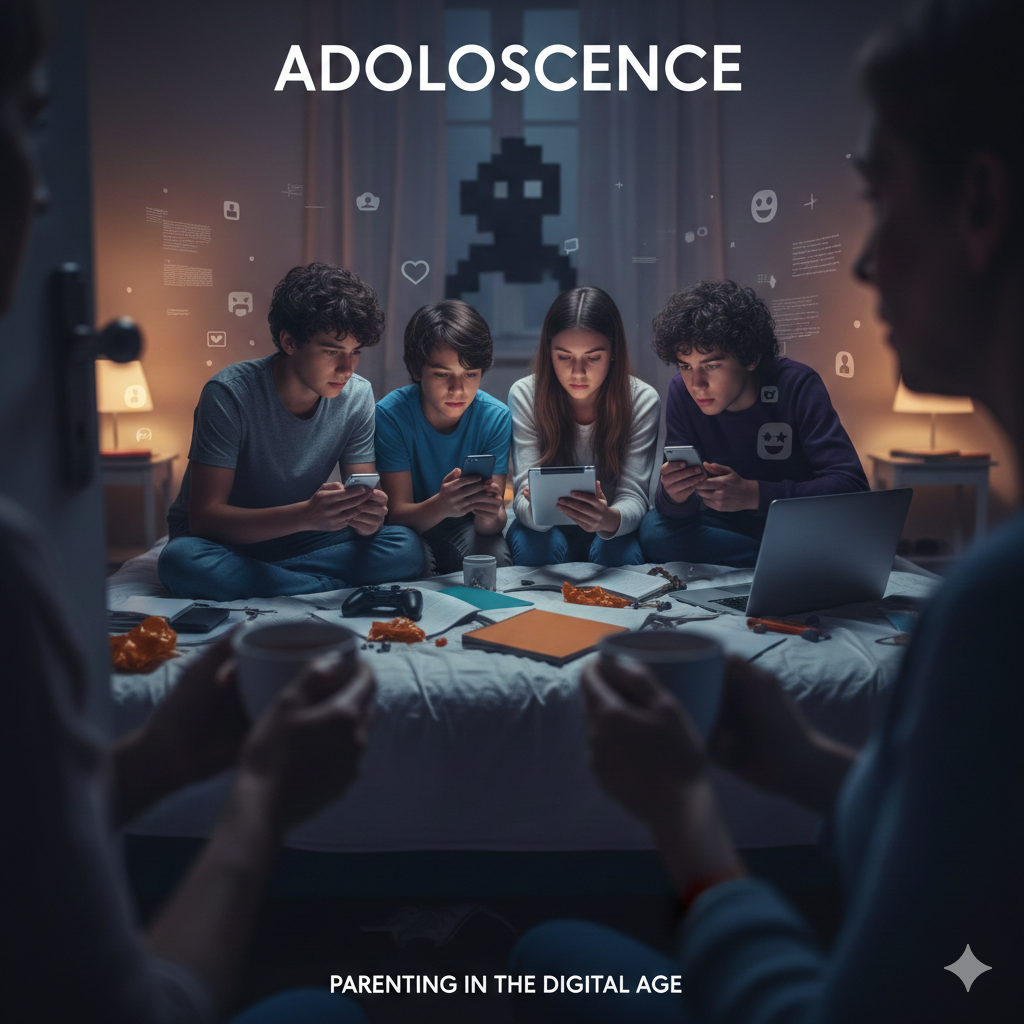
The Series: A Chilling Mirror to Reality
Written by Jack Thorne and Stephen Graham, and directed by Philip Barantini, Adolescence is a 2025 British crime drama mini-series that is as gripping as it is terrifying. The story centers on a 13-year-old schoolboy arrested for the murder of a classmate. Spanning four parts and filmed in a continuous-shot style, the series excels in storytelling, direction, acting, and atmosphere.
Adolescence bravely highlights critical issues like misogyny among children, the misuse of social media, and the intense psychological pressures faced by teenagers today.
The Harsh Truth Behind “Not My Child”
For those who have watched the series, the emotional impact is hard to shake. It is a frightening portrayal that every adult in society needs to see. Parents often say, “I know my children; they would never do something like that.” However, the series forces us to realize that we often fail to notice the subtle changes in our children’s behavior.
Adolescence reveals a painful truth: we don’t truly know what our children are doing. You might think this is just a TV drama or something happening in a distant country, but remember—social media has no borders.
The Hidden Dangers of the Digital World
Countless social media accounts exploit children’s lack of experience and inability to distinguish right from wrong. We are often oblivious to:
- The influencers they follow and how they are being swayed.
- The true meaning behind the comments they post.
- The hidden symbolism in the emojis and colors they use.
The series introduces terms and slang that may be new to us; if you search for their meanings, the results will likely shock you.
Parenting in the Modern Era: Challenges and Responsibilities
Raising children with strong values has always been important, but modern parents face unique hurdles. In today’s world of nuclear families and working parents, many struggle to provide the attention children need. While every parent desires their child to have empathy, respect, and honesty, we must accept that if a child goes astray, the responsibility often lies with the lack of parental supervision.
The Role of Parents as Role Models
Parents are a child’s most influential role models. If you want your child to possess certain qualities, you must demonstrate them yourself. However, do not force your own unfulfilled desires onto them. Scaring, isolating, or constantly criticizing children—while withholding the love they deserve—will only lead to resentment and rebellion later.
Key values to demonstrate:
- Kindness and Respect: Show empathy in your interactions with others.
- Gender Equality: Divide household chores without gender bias to show that roles aren’t fixed by sex.
- Emotional Intelligence: Listen patiently to their opinions and acknowledge their feelings.
Essential Guidelines for Digital-Age Parenting
- Limit Screen Time: Monitor their mobile usage and ensure your presence while they are online.
- Keep Tech in Common Areas: Do not keep televisions or computers in a child’s private bedroom.
- Open Communication: Avoid parenting through extreme affection or physical punishment. Instead, talk to them daily about their lives.
- Observe Changes: Be alert to even the smallest shifts in their behavior or mood.
- Know Their Circle: Monitor who they interact with and understand who their friends are.
- Avoid Unsupervised Adult Interaction: Do not allow children to mingle excessively with older adults without supervision.
- Encourage Passions: Support their interests and extracurricular activities alongside their formal education.
Social Media Bans for Minors
- Australia: Officially began enforcing a ban for children under 16 years of age starting December 10, 2025.
- Malaysia: The government has announced a ban for children under 16, which is set to be implemented starting in 2026.
- France: Plans to implement a strict ban for children under 15 in September 2026. Additionally, they are considering a “Digital Curfew” for those aged 15 to 18, which would restrict platform usage between 10 PM and 8 AM.
- Denmark: Has reached an agreement to ban social media for those under 15. Children aged 13 and 14 will only be allowed access with parental consent. This is expected to be implemented by the end of 2026.
- Norway: Recently proposed raising the minimum age for social media use to 15.
- Spain: Has raised the minimum age for social media usage from 14 to 16.
United Kingdom & China: Similar regulations have been introduced in these countries as well. In China, strict time limits are already in place, prohibiting those under 18 from using social media and gaming platforms during nighttime hours.
Conclusion
Foster a sense of responsibility by involving children in age-appropriate chores. Teaching them to care for their belongings and fulfill their school duties makes them independent and respectful.
Most importantly, treat boys and girls equally. Avoid gender-stereotyping toys—let them choose what they enjoy. Our children are the next generation; raising them with care and awareness is the greatest service we can do for our families and society.