
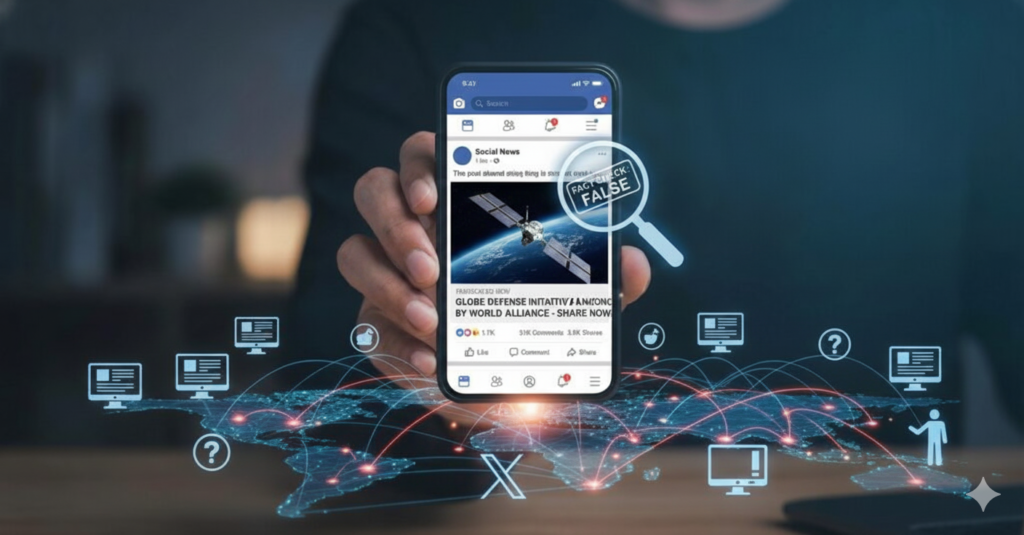
Many individuals believe that solely my perceptions are valid. However, is everything we observe and perceive genuine? How often do people verify its accuracy? We communicate with others in diverse ways, often without confirming what we hear or see. In earlier times, information spread through oral traditions, but today it quickly circulates via social media. Yet, the majority of this information is misleading.
While the fact-checking mechanisms exist on social platforms, they are inadequate in halting all misinformation. Most individuals often trust what their contacts, pages, and influencers on social media proclaim. One significant issue in society is the counsel from those spreading misinformation. Their words may appear credible, but in truth, they carry little validity.
What distinguishes truth from falsehood ?
Those with smart phones are led to believe in their privacy. However, all data saved on your device can be viewed, stored on servers, and some shared with third parties by your phone provider and installed applications. Cyber criminals can also infiltrate this data.
No bank in India, including the RBI, offers absolute guarantees for all funds in your account. Instead, a limited deposit insurance system is in effect.
Many people accept that Isaac Newton discovered gravity when an apple supposedly fell on his head. In actuality, the apple fell to the ground in front of him. Remember, consuming an apple daily won’t ensure you remain doctor-free.
If bitten by a snake, tying something over the wound or draining blood will not save the victim.
Detox diets and treatments are marketed as methods to cleanse the body. However, the liver, kidneys, and colon predominantly manage the filtration and removal of waste and toxins. The human body inherently detoxifies itself.
Fats are detrimental to heart health. While certain fats are harmful, others are beneficial to cardiovascular health and overall bodily function.
Not everyone is required to drink 13 glasses of water daily. Increased consumption may be necessary if your urine appears dark yellow, you engage in vigorous activities, or reside in warmer climates.
Healthy individuals do not elevate their risk of heart disease by consuming one or two eggs daily. While yolks contain cholesterol, it is not detrimental. Additionally, eggs are rich in nutrients like omega-3, which may lower the risk of heart ailments.
You don’t have to spend excessive hours in a gym to achieve good health and muscle development. If you are unable to meet your daily protein requirements through whole foods, using a high-quality protein powder is a viable option.
Individuals with high body weight, cholesterol, or those aiming for health should prioritize controlling their diet, selecting protein-rich foods, and ensuring 7 to 8 hours of sleep.
Relying solely on medication for diabetes and cholesterol management is unwise without dietary regulation. Though medicine can assist in managing blood sugar and cholesterol levels, focusing on diet and lifestyle is essential for overall well-being.
Even five years post-COVID-19 vaccination, there are claims linking any ailments to the vaccine. Most vaccine side effects are transient, surfacing days or weeks after administration. Furthermore, serious long-term consequences from the COVID-19 vaccines are reported only in rare instances.
The belief that brown chicken eggs are superior to white ones is common. Brown eggs slightly outperform white eggs in protein content (12.80g / 100gvs. 12.23g / 100g). This difference is marginal. White-feathered hens produce white eggs, while brown-feathered hens produce brown eggs.
HIV is not transmitted through casual contact. It is not spread through hugging, kissing, sharing bathrooms, or using the same dishes or drinking vessels.
Social media trends often encourage suppressing emotions and trying to be happy all the time, suggesting that mental health can be restored simply by making up one’s mind. This is known as Toxic Positivity. While thinking positively is beneficial, completely suppressing one’s emotions is detrimental to mental health. Often, professional help is necessary to navigate these challenges.
Social media can never provide real-life experiences; it is a virtual world. This is not to say we shouldn’t use social media, but we must avoid becoming addicted to it. True human experiences are gained through face-to-face conversations and real-world observations.
Does a human being need happiness or peace? Happiness is never permanent because the mind requires a reason to be happy. However, peace requires nothing at all.
Conclusion
Verify the accuracy of what you hear and see. Avoid disseminating information that you do not completely comprehend. Do not self-prescribe medicines or advise others.