
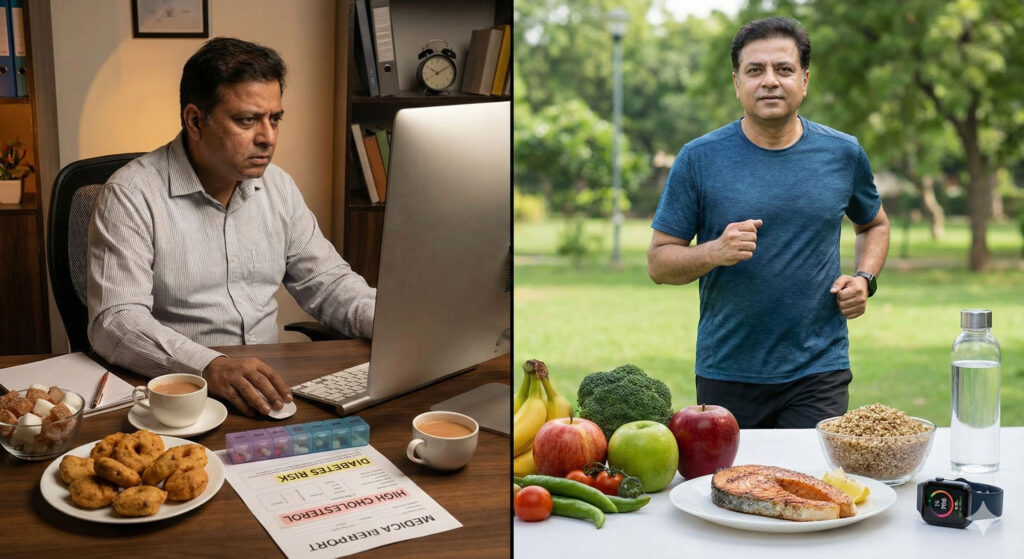
My friend is an office employee. Before the world changed, he used to go out and play sports regularly after work. Then, the COVID-19 pandemic spread across the globe, and nations announced lockdowns. Due to the circumstances, my friend couldn’t play anymore, and he stopped doing any physical activity altogether.
It started with a slight headache. Instead of seeing a doctor, he bought some over-the-counter pills, but the pain didn’t subside. Slowly, the headache turned into a constant heaviness in the head. When it persisted for days, he finally consulted a doctor who recommended a series of tests.
The blood test results showed high cholesterol levels. The doctor prescribed medication and advised him to exercise and regulate his diet. He followed this religiously—taking pills, exercising six days a week, and controlling his food. After a while, a re-test showed that his cholesterol had dropped.
That’s when complacency set in. The pills ran out, and the exercise frequency dropped to three days a week, with reduced duration. Worse, he started treating himself after workouts with sugary tea, snacks, or sweets.
One year later, he has completely stopped exercising. Due to recurring health issues, he tested his blood again. The result? High blood sugar and high cholesterol. The doctor prescribed medication for everything and delivered the hard truth: “You have diabetes. You will have to take medication for the rest of your life. Avoid sugar completely, control your diet, and continue exercising.”
My friend is now mentally devastated. He cannot accept the reality that his body and life have changed—that he has to be on medication forever and can no longer enjoy food the way he used to.
The Math Behind the “Tea” Trap
Let’s look at the numbers.
- Tea: Milk + Sugar + Tea leaves. One cup is roughly 72 calories.
- 4 cups a day = 72 x 4 = 288 Calories
- Snacks (e.g., Vada): One Vada is roughly 100 calories.
- 2 Vadas = 100 x 2 = 200 Calories
Total Calorie intake just from tea breaks = 488 Calories.
An average Malayali (or anyone with a similar diet) often consumes four teas and two fried snacks daily. Together, this is nearly 500 calories.
- A man who doesn’t do heavy manual labor needs about 2000 to 2200 calories a day.
- A woman needs about 1600 to 2000 calories.
When you add breakfast, a heavy lunch (fried fish, chicken, biryani), dinner (often fast food), plus intermittent snacking on fruits, juices, and sugary drinks, our calorie intake often doubles what our body actually requires.
The Consequences of Overeating
Consuming excess food daily slowly increases body weight. The body stores this excess energy as glycogen and fat. This significantly increases the risk of obesity, diabetes, fatty liver, heart disease, and high blood pressure. It can also lead to digestive issues, sleep deprivation, and mental health struggles. In a way, our diet is the culprit behind most of our health problems.
The Dangerous Mindset
Everyone knows what lifestyle diseases are, yet few understand how they truly affect us. Whether they have the disease, are at risk, or believe they are immune, many people sing the same tune: “If I get sick, I’ll just take medicine.”
There is a common justification: “We only have one life. Illness will come eventually. We can’t eat well when we are old, so let’s eat everything now. If I get sick, I have money, doctors, and medicine.”
When cholesterol spikes, people rush to the gym or start running. But once the levels drop, they think they are cured forever and return to their old lifestyle. Doctors prescribe exercise, but few obey. Most prefer to rely solely on pills. Exercise is great, but without diet control, regret is inevitable.
In today’s society, being thin is often mistaken for illness, while obesity and a potbelly are wrongly seen as signs of prosperity and health. Many believe weight gain is simply a natural part of aging. Some even believe that sugar is as essential to life as food itself and that they cannot live without it.
How to Reduce Lifestyle Diseases
What to Include:
- Fruits
- Whole Grains
- Vegetables
- Fiber
- Protein
- Healthy Fats
- Proper Hydration
- Omega-3 & Omega-6 Fatty Acids
- Fish
What to Avoid:
- Processed Foods
- Sugary Items
- Unhealthy Fats
- Excess Salt
- Alcohol
Conclusion
Don’t live to eat; eat to live.
We have only one life. To enjoy it fully, we need to be free from major illnesses. We all face problems in life, and most can be overcome. But a chronic illness haunts you; it steals your sleep and your peace of mind.
Routine activities become habits over time, and we stop thinking about them. Unfortunately, diseases don’t work that way—they demand constant attention. Regulate your food, exercise, sleep well, and always consult a doctor instead of self-medicating when sick.
Take care to prevent illness before it starts.