
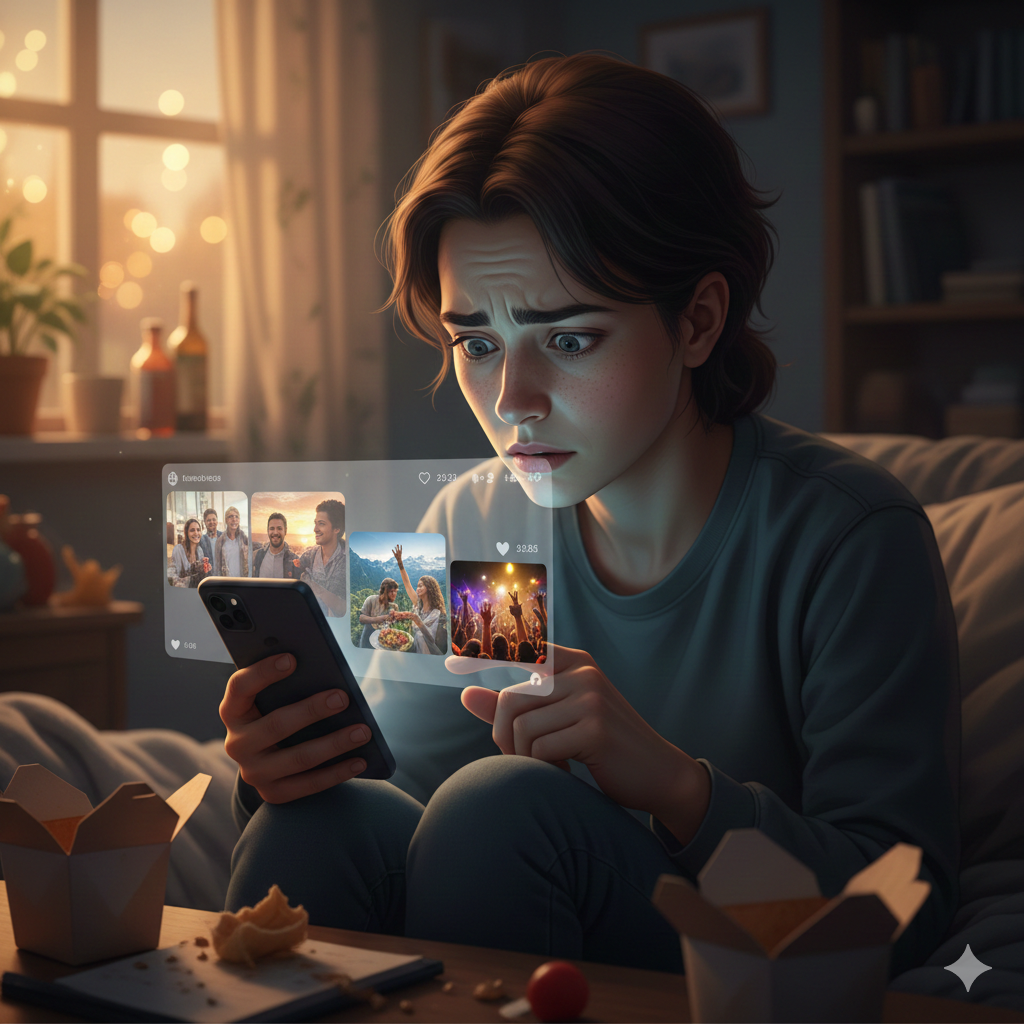
‘FOMO’ or ‘Fear of Missing Out’ is the anxiety that arises from the concern of missing something significant if you take a break from the digital realm, a prevalent mental state in today’s society. This experience is particularly evident among those who frequently engage with social media platforms. The Fear of Missing Out stems from the apprehension that something vital will occur while you’re disconnected. Will you miss out on events that others are enjoying?
Individuals who continuously share updates on social media are often more prone to FOMO. They might spend their entire day scrolling through feeds, feeling that others are experiencing joy when they are online. This line of thinking causes discomfort, driving them to remain online. A person might embark on a journey or visit a location for its purpose, yet after a while, they find themselves pulling out their phone, checking social media for the latest news.
Those afflicted by FOMO typically find themselves checking their devices relentlessly. This behavior persists even during conversations with others, while eating, in the restroom, attending class, driving, or at work; they struggle to sleep through the night, fixating on their screens. Such habits can adversely impact their education, employment, and overall well-being. Furthermore, another challenge associated with FOMO is the continuous comparison of one’s life to that of others, often leading to dissatisfaction due to a perceived lack of participation in the happiness and celebrations experienced by others. Many individuals take everything they encounter on social media at face value and worry about the things they are missing out on.
It is common for those with FOMO to be in a perpetual state of anticipation for new notifications, feeling disappointed when none arrive. Those who derive little fulfillment from their everyday experiences and have numerous unachieved aspirations are more vulnerable to FOMO. These individuals tend to view social media as a remedy for life’s shortcomings. Ironically, excessive social media usage exacerbates their discontent. FOMO is especially prevalent among adolescents and young adults, whose strong desire for acknowledgment and acceptance can lead to an over-reliance on social media for validation. Similarly, individuals facing mental distress, feelings of loneliness, and low self-worth often compensate with heavy social media use, thus sliding into FOMO. Many find solace in the fabricated happiness depicted online as a means of escaping real-life challenges.
Impacts of FOMO
Those impacted by FOMO frequently suffer from heightened sleep deprivation, anxiety, and psychological strain. The routine of incessantly checking social media can cut into sleeping hours, and prolonged behavior may affect physical health as well.
FOMO can also disrupt social connections. Prioritizing the online domain over face-to-face interactions can diminish the quality of relationships. The ongoing cycle of comparison and discontent fostered by FOMO can strain familial and marital bonds. The belief that others lead more exciting lives fosters greater dissatisfaction, leading to issues within relationships.
Strategies to Combat FOMO
A digital detox stands out as one of the most effective strategies to combat FOMO. Set aside one day a week to entirely abstain from social media. Allocate a designated time frame each day to engage with social platforms. Establishing screen time limits, disabling phone notifications, and removing automatic login options can assist in alleviating FOMO. Reducing screen time can enhance mental wellness. Limit phone usage before bedtime, during meals and while spending time with family.
Practices such as meditation, yoga, and deep-breathing exercises can cultivate self-awareness and enhance focus on the present moment. These techniques can mitigate the consequences of FOMO. Engaging in enjoyable activities such as reading, walking, playing sports, and pursuing other leisure hobbies are effective ways to diminish FOMO. Attempt to avoid checking your phone immediately upon waking and right before sleeping.
Conclusion
Value real-world experiences. Pursuing new hobbies, having direct interactions with friends and family, and connecting with nature can elevate our quality of life and lessen FOMO’s impact. Maintaining a balanced diet, regular exercise, and sufficient sleep can also reduce FOMO’s effects.
Identify the signs of FOMO and recognize how it affects your mood. Remember that the portrayals on social media often represent a limited truth, emphasizing the positive aspects of individual lives.